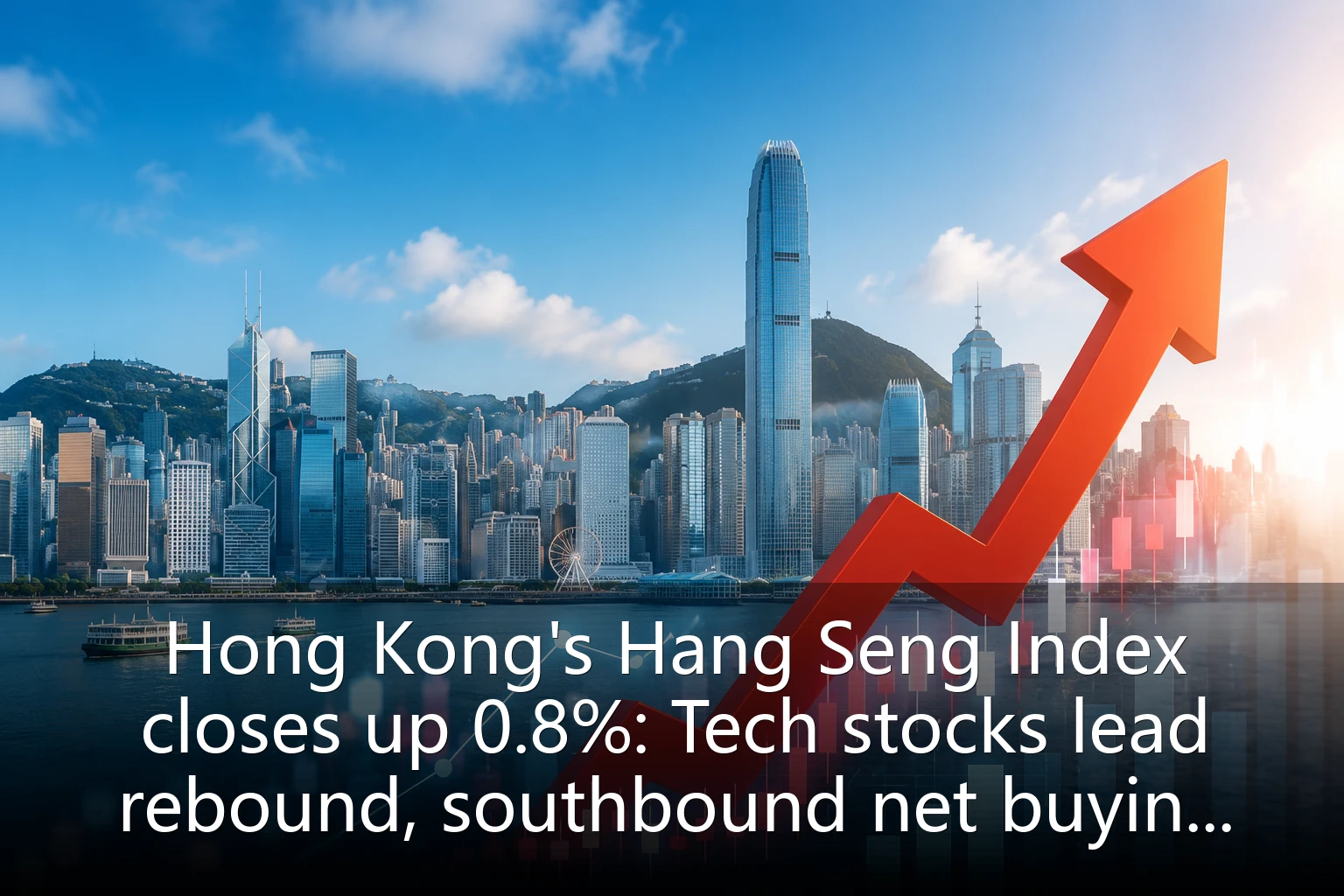
On July 28, 2026, Hong Kong stock market saw a long-awaited rebound. The Hang Seng Index opened lower and rose, eventually closing up 0.8% at 22,500 points. The H-share Index rose 1.1%, and the Tech Index gained 1.8%. On the board, technology, pharmaceutical, and consumer stocks strengthened collectively, with market sentiment notably improved. Southbound capital bought a net HK$5 billion throughout the day, a new high in nearly two weeks, indicating mainland funds are accelerating back into Hong Kong stocks.
Tech stocks lead gains, Meituan and Tencent surge
Tech stocks were the main driving force in today's rebound. Meituan (03690.HK) surged 4.2% to HK$188, leading the Hang Seng Index constituents. On the news front, the company is about to announce its second-quarter earnings next week, and the market expects its food delivery and in-store businesses to beat expectations. Tencent (00700.HK) closed up 2.8% at HK$425, gaining southbound capital holdings for three consecutive days with cumulative net buying exceeding HK$3 billion. Additionally, Alibaba (09988.HK) rose 1.9%, and JD.com (09618.HK) gained 2.5%, with tech stocks overall seeing net capital inflows.
Analysts pointed out that the tech stock rebound was mainly driven by two factors: first, cooling expectations for Fed rate hikes, with the dollar index falling below 98, easing capital outflow pressure on emerging markets; second, mainland regulatory policies stabilizing, with policy support for the healthy development of the platform economy, boosting market confidence in tech stock valuation recovery.
Southbound capital makes large purchases, favoring finance and tech
Southbound capital net bought HK$5 billion today, with the Shanghai-HK Stock Connect net buying HK$2.8 billion and the Shenzhen-HK Stock Connect net buying HK$2.2 billion. By individual stocks, capital mainly flowed into blue chips such as Tencent, Meituan, and Ping An Insurance (02318.HK). Ping An Insurance rose 1.3% today, with net buying of HK$450 million. Financial stocks like banks and insurers also attracted southbound capital attention.
Based on historical data, southbound capital tends to accelerate inflows after the Hang Seng Index falls below 22,000 points. The current net buying scale is comparable to past bottom zones. Deutsche Bank's latest report noted that Hong Kong stocks currently have a price-to-earnings ratio of only 9.5 times, below the historical average, highlighting valuation appeal. The index is expected to challenge 24,000 points within the year.
Sector rotation: pharmaceuticals and consumer stocks take the baton
In addition to tech stocks, the pharmaceutical and consumer sectors were also active today. The Hang Seng Healthcare Index rose 1.5%, WuXi Biologics (02269.HK) gained 3.2%, and Innovent Biologics (01801.HK) climbed 2.9%. In the consumer sector, China Resources Beer (00291.HK) rose 2.1%, and Mengniu Dairy (02319.HK) added 1.8%. Market sentiment shifted from defensive to growth-oriented, indicating a recovery in risk appetite.
Today's total turnover in Hong Kong stocks was HK$125 billion, up 15% from the previous day. Analysts believe that the enlarged turnover is one of the signals confirming a market bottom. Investors can watch for continued volume expansion. If the Hang Seng Index holds above 22,500 points next week, the short-term rebound may continue.
Outlook: Focus on Fed policy meeting and mainland economic data
Looking ahead, market attention will focus on the Fed's interest rate decision meeting early Thursday morning. The market generally expects rates to remain unchanged, but the dot plot may release a more dovish signal. On the mainland, the July official PMI data will be released on Friday, with the market expecting manufacturing PMI to edge up to 49.8. Signals of economic stabilization will support the Hong Kong stock rebound.
The chief strategist at Guotai Junan International said: "Hong Kong stock valuations are at historical lows. Combined with favorable policy and capital flows, it is a good time to position for the medium to long term. We recommend focusing on high-dividend blue chips and oversold tech leaders."