Introduction: A low-volume doji amid the bull-bear tug-of-war—is the HK market on the eve of a trend reversal?
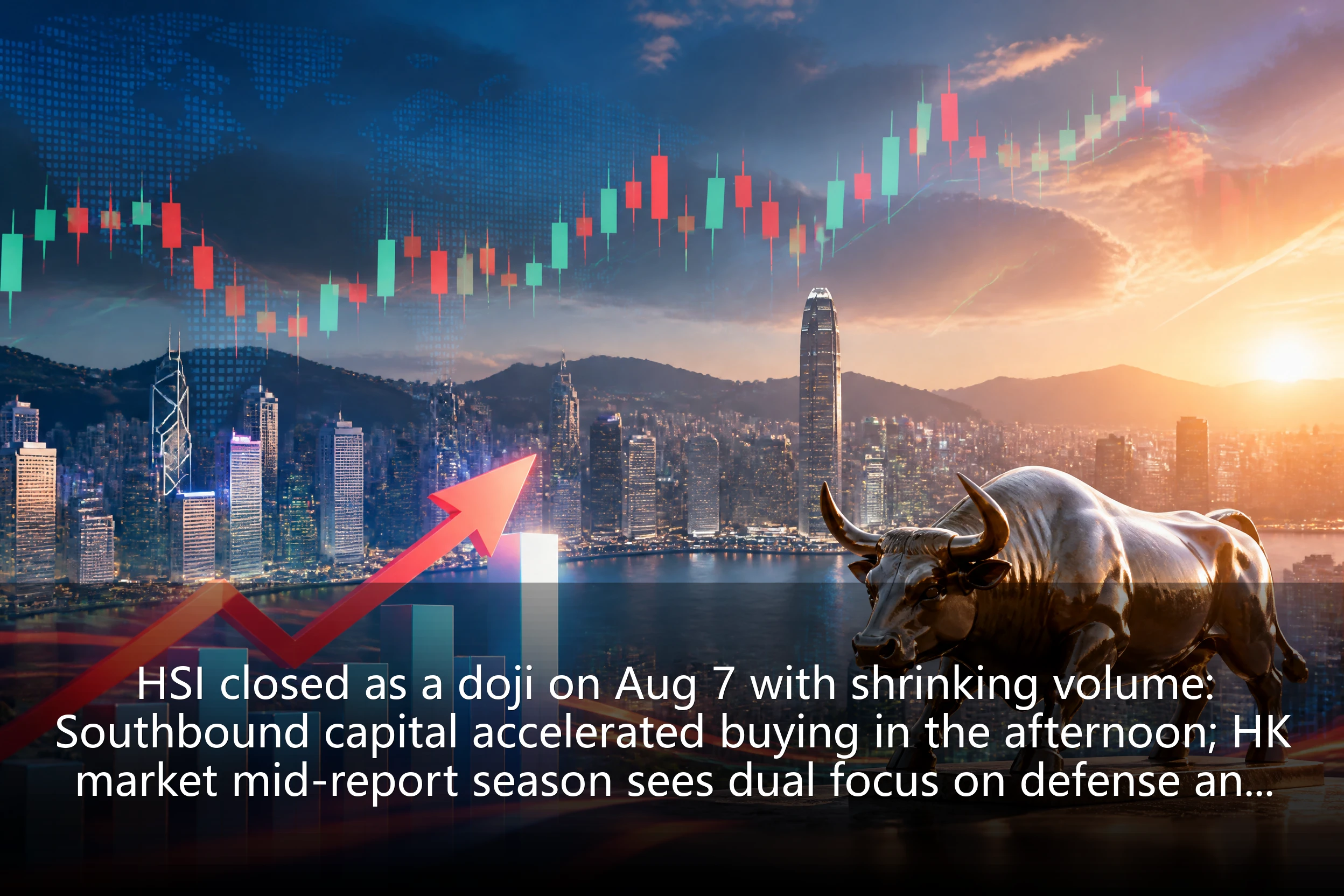
On August 7, 2026, after a continuous rebound, the HK market witnessed a typical low-volume volatile trend. The Hang Seng Index fluctuated narrowly around the previous close, finally forming a doji with a long lower shadow. Trading volume shrank significantly compared to previous sessions, indicating hesitation among both bulls and bears near key levels.
However, behind the seemingly flat index performance, the internal structural game in the HK market was exceptionally fierce. Southbound capital—the core channel for mainland funds—showed a clear accelerated inflow in the afternoon, with net buying breaking through recent averages again. This pattern of a calm index with surging undercurrents often indicates the market is on the eve of a new trend reversal cycle. For investors closely monitoring the HK market, analyzing the true flow of funds beyond the index's surface is more important than merely watching stock colors.
1. HSI Volatile Throughout the Day with Shrinking Volume, Technicals Face a Key Test
Looking at the HSI intraday trend, after a slightly lower open, the index tested downside support dragged by heavyweight stocks. However, as short-selling momentum faded, the index gradually recovered. The afternoon saw a prolonged consolidation, with bulls failing to organize an effective upside breakout and bears struggling to substantially break below moving average support.
1. Trading Volume Shrinks, Market Sentiment Turns Cautious
The shrinkage in total turnover today is one of the most noteworthy signals. After continuous capital inflows pushed the index's center of gravity up, the sudden convergence in volume usually implies a decreasing willingness to take short-term profits, but also weakening momentum for off-market funds to chase highs. This wait-and-see state with shrinking volume is a typical market psychological characteristic ahead of the intensive interim report disclosure period. Funds are reluctant to make large-scale one-way bets before earnings uncertainties settle, leading the index into a stalemate.
2. Core Moving Averages Intertwined, Reversal Window About to Open
Technical analysis shows the HSI is currently in a dense convergence zone of multiple medium- and short-term moving averages (5-day, 10-day, 20-day). The index closed just above the upper edge of this intertwined zone, indicating bulls still control the medium-term initiative. However, the MACD histogram shows a shrinking trend, and the KDJ indicator is flattening at high levels with initial signs of a bearish cross. This means that without better-than-expected positive catalysts in the short term, the index will likely digest overhead trapped positions through time consolidation. Once volume expands again, the index is expected to break the current deadlock and challenge higher resistance levels.
2. Southbound Capital Accelerates Buying in the Afternoon, Mainland Funds Show Clear Intent to Support the Market
In the real-time HK market monitoring system, southbound capital movements have always been regarded as a wind vane for smart money. Today, southbound capital not only did not stagnate due to the market's shrinking volume but instead showed an accelerated net buying trend in the afternoon, maintaining high net buying scale throughout the day. This phenomenon conveys several key market signals:
1. Core Logic of Buying on Dips Remains Unchanged
Although the HK market has seen certain gains previously, compared to other major global capital markets, its valuation depression effect remains significant. Southbound capital daring to add positions against the trend during index pullbacks or volatility shows mainland funds still highly recognize the medium- and long-term allocation value of core HK assets. This strategy of buying on dips and during volatility builds a solid liquidity foundation for the HK market.
2. Dual Drive of Exchange Rates and Macro Expectations
Recently, expectations for Federal Reserve rate cuts have fluctuated, but the overall loose macro direction remains unchanged. The expectation of a weaker US Dollar Index allows the exchange rate advantage of the HK Dollar's peg to the USD to continue. For southbound capital, this means enjoying potential exchange rate hedging dividends while obtaining asset appreciation returns. Additionally, the continuous repair of domestic macroeconomic fundamentals provides fundamental support for mainland funds to allocate high-quality Chinese enterprises via Stock Connect. The accelerated capital inflow in the afternoon is likely a hedging operation to guard against and position for potential fluctuations in the US stock market overnight.
3. Sector Performance Diverges: Defensive Attributes and Earnings Expectations Become the Main Lines
Against the backdrop of index volatility, today's HK sector market showed extremely distinct divergence characteristics. The rapid rotation of funds among sectors highlights the current market's balanced allocation strategy of using defense as a shield and growth as a spear.
1. High-Dividend Blue-Chip Sector: Safe Haven Effect Highlights Again
Intraday, high-dividend defensive sectors represented by energy, utilities, telecom operators, and large state-owned banks showed strong resilience, with some stocks even rising against the trend. During the earnings verification window of the interim report season, funds' pursuit of certainty peaked. High-dividend sectors not only provide stable cash flow returns, but their low volatility and abundant cash flow also make them the best safe haven for institutional funds to avoid earnings landmines. Especially against the backdrop of uneven global macroeconomic recovery, the bond-like attributes of high-dividend assets make them the preferred ballast for long-term funds.
2. Tech and Pharma Growth Sectors: Funds Lurking for Earnings Catalysts
Unlike the stability of defensive sectors, tech and pharma sectors experienced increased intraday volatility. Some internet leaders with large previous gains faced short-term profit-taking pressure and pulled back. However, from capital flow details, southbound funds did not withdraw significantly during these pullbacks, instead showing a trend of buying the dips. Industry analysis suggests that with the accelerated implementation of AI computing power applications and the continuous improvement of overseas pharma financing environments, tech and pharma sectors have strong potential to exceed expectations in the interim report season. The current brief pause in funds is actually building momentum for the next wave of earnings-catalyzed market trends.
3. Cyclical and Consumer Sectors: Macro Sensitivity Tested
Cyclical stocks like raw materials were under overall pressure today due to commodity price fluctuations, while the consumer sector sought structural opportunities amid divergence. Consumer staples performed relatively steadily, while consumer discretionary remained volatile due to market disagreements on the resilience of short-term consumption recovery. This indicates that in an environment lacking a comprehensive bull market foundation, bottom-up selective stock picking is more critical than blindly betting on sector beta.
4. In-Depth Market Analysis: Why is the 2026 Interim Report Season Particularly Crucial for the HK Market?
Standing at the current juncture, we must recognize that the 2026 interim report season holds extraordinary strategic significance for the HK market. It is not only a touchstone for verifying the implementation effects of previous growth-stabilizing policies but also a watershed for reshaping the market's valuation logic.
1. Resonance of Policy Dividend Release and Corporate Earnings Repair
Since the second half of 2025, a series of policies aimed at stimulating market vitality and boosting investor confidence have been introduced. Entering 2026, the cumulative effects of these policies have begun to appear on corporate micro-statements. If the interim reports generally verify dual growth in corporate revenue and profit, the HK market's current valuation repair logic will officially switch from policy-driven to fundamentals-driven, a shift that will greatly enhance the sustainability of the market trend.
2. Valuation Reassessment Under Global Capital Rebalancing
Against the macro backdrop of major global economies entering a rate-cut cycle, global capital is initiating a new round of rebalancing. As a special existence combining China's high-growth dividends with the legal environment of a mature market, the HK market is attracting more and more long-term foreign capital to flow back. The earnings performance during the interim report season will become an important basis for foreign institutions to reassess the pricing power of Chinese assets. Once core heavyweight stocks deliver impressive answers, it is expected to trigger passive allocation increases from foreign capital, thereby driving an index-level breakout.
5. Market Outlook and Trading Strategy Suggestions
Combining various data and characteristics from today's real-time HK market monitoring, we maintain the judgment of short-term volatile consolidation with an unchanged medium-term positive trend. Operationally, we suggest investors follow the main capital lines and adopt a barbell allocation strategy:
- Defensive end: Continue to firmly allocate high-dividend, low-valuation blue-chip sectors, such as utilities, energy, and financial leaders. Utilize their stable dividend expectations to hedge against short-term market volatility risks and obtain certain returns.
- Offensive end: Buy on dips to position in tech and pharma leaders expected to beat interim earnings expectations. Focus on growth stocks with core technical barriers, high overseas revenue ratios, and benefits from AI industry trends, waiting for valuation reconstruction under earnings catalysts.
- Risk control end: Stay vigilant against thematic stocks lacking fundamental support that were purely hyped previously. In a low-volume volatile market, liquidity premiums will converge rapidly, and such stocks face significant liquidity discount risks.
Conclusion
The low-volume doji on August 7 is a respite for the HK market after a sprint, and also a chip exchange and logic verification by bulls and bears for the next phase. The continuous influx of southbound capital injects the strongest confidence foundation into the HK market, while structural divergence among sectors points out the specific direction for gold mining in the interim report season. In this August full of variables and opportunities, investors can only maintain patience, closely follow the dual main lines of earnings and capital, to move steadily and far in the HK market's volatility, and capture true era dividends.