Southbound funds keep buying—why does Hong Kong remain attractive?
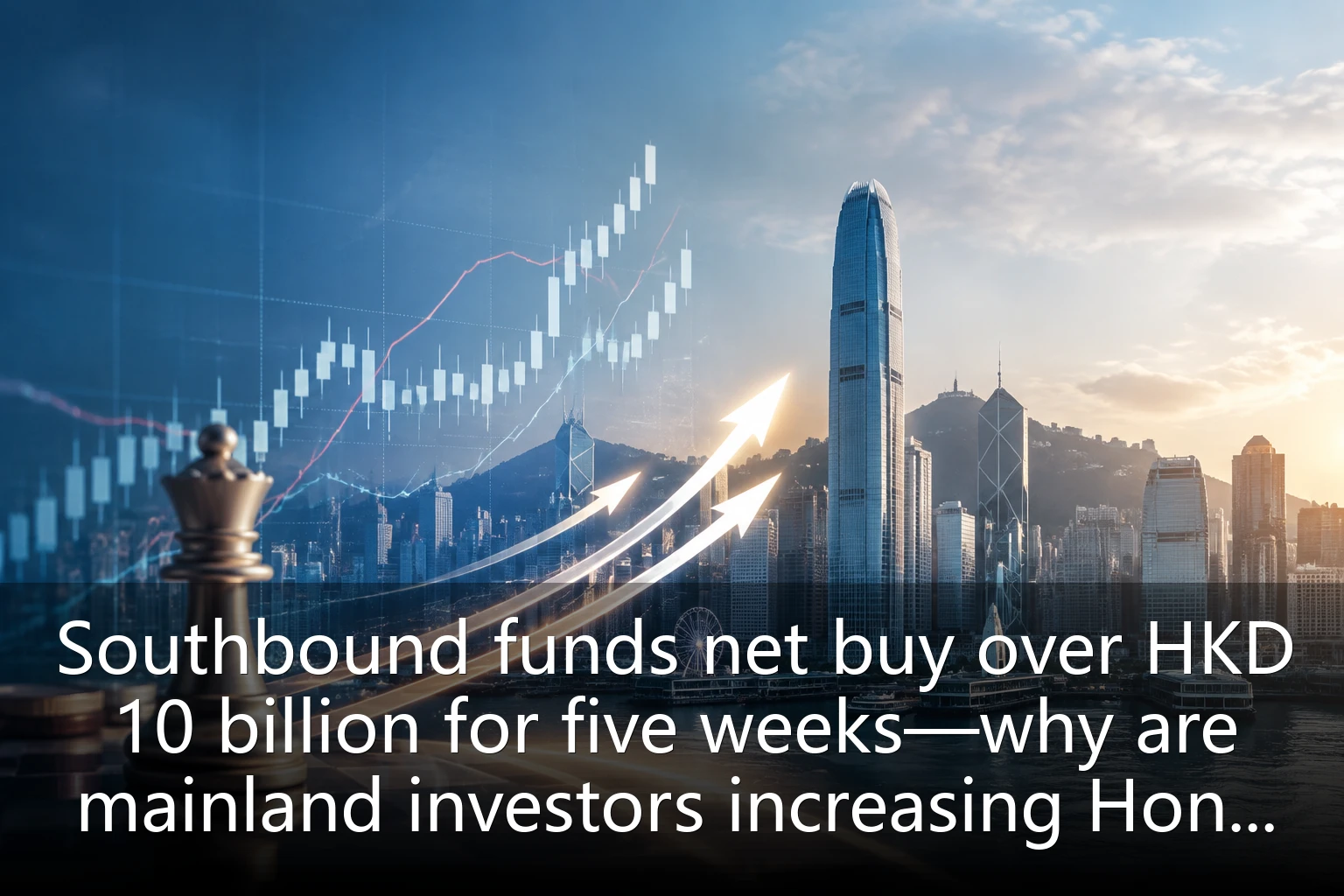
Entering August 2026, global capital markets face heightened volatility from Fed policy expectations and geopolitics, yet Hong Kong's market has received a steady stream of liquidity. According to the latest Stock Connect data, southbound funds recorded net buying exceeding HKD 30 billion in the week ending August 2. This marks the fifth consecutive week of net inflows above HKD 10 billion, with cumulative net buying surpassing HKD 150 billion.
Logic behind the flows: Not just hedging, but value discovery
While global equities have been shaken by a pullback in US tech stocks, Hong Kong has shown notable resilience. Analysts note that sustained mainland inflows are not simply bottom-fishing or hedging; they reflect deeper asset allocation logic. Compared with the relatively crowded AI trade and high valuations in US stocks, Hong Kong—especially high-dividend blue chips in the Hang Seng Index and select tech leaders—offers compelling valuation appeal.
Data shows the Hang Seng Index's price-to-earnings ratio remains in the low-to-mid historical range, highly attractive to mainland long-term investors such as insurers, pension funds, and mutual funds seeking stable returns. Amid a scarcity of quality assets, Hong Kong provides many high-quality targets rarely available in the A-share market, including leading internet platforms, globally oriented consumer brands, and high-dividend utility stocks.
Structural opportunities emerge: Which sectors do mainland investors favor?
Capital flows show clear structural preferences. Beyond traditional safe-haven high-dividend state-owned enterprises (energy, telecoms, banks) that continue to attract net inflows, funds have recently tilted significantly toward the tech sector. With favorable policies such as lowered Stock Connect thresholds taking effect, more retail and institutional investors are focusing on fundamentally sound internet leaders and new energy vehicle supply chains that have undergone prolonged price corrections. Additionally, high-growth biotech stocks are back on southbound investors' radar.
Market data indicates that over the past five trading days, top net-bought stocks by southbound funds are concentrated in internet leaders, consumer electronics, and utilities. The consensus view is that as domestic growth-stabilizing policies are further implemented in the second half of the year, Hong Kong's earnings growth is expected to bottom out and recover, providing fundamental support for continued southbound inflows.
Stock Connect mechanism optimization lowers investment barriers
This wave of southbound inflows is closely linked to ongoing Stock Connect enhancements. The Hong Kong Exchange's push for RMB-denominated stock trading counters has entered a substantive phase, reducing exchange-rate risk for mainland investors and improving trading convenience. Meanwhile, expectations of adjusted Stock Connect thresholds are attracting additional incremental capital to position in Hong Kong.
For mainland investors, investing in Hong Kong is no longer a niche endeavor but an important avenue for global asset allocation, risk diversification, and yield enhancement. Compared with US markets, Hong Kong prices Chinese assets more directly without language or information barriers—a key reason mainland investors are confident enough to keep adding positions amid volatility.
Outlook: Hong Kong's allocation value remains prominent
Looking ahead to August and the second half of the year, while external liquidity conditions remain uncertain, Hong Kong's internal recovery momentum is strengthening. The sustained pulse-like southbound inflows are gradually reshaping Hong Kong's valuation and pricing system. As more US-listed Chinese companies return and new-economy leaders list in Hong Kong, the market's appeal will further increase.
For investors still on the sidelines, current valuation levels, capital flows, and the policy environment all point to a relatively favorable investment window. However, large-scale southbound inflows and outflows may also amplify market volatility. While seizing trading opportunities from mainland capital flows, investors should remain vigilant about short-term shocks from global geopolitical risks and Fed policy reversals, and manage position sizing prudently.