Global Turmoil from the Korean Stock Selloff and Hong Kong’s Resilience: Structural Divergence in a Risk-Off Market
Keywords: Korean stock market, global equities, Hong Kong stocks, risk appetite, capital flows, market resilience
Introduction
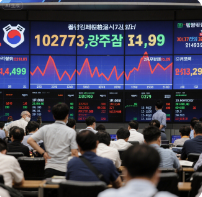
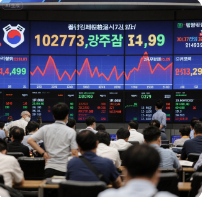
On July 13, the KOSPI fell nearly 9%, and the extreme move quickly amplified tension across global capital markets. As one of Asia’s important risk-asset markets, the sharp drop in Korean stocks not only dragged down regional performance, but also forced global investors to reassess liquidity, valuation and earnings expectations in the current environment. While most markets came under pressure, Hong Kong stocks showed relatively steady performance and became one of the few Asia-Pacific markets to hold up against the trend. This contrast reflects not only structural differences between markets, but also a renewed preference for safety margins and asset-pricing logic.
1. The Korean Stock Selloff: A Snapshot of Collapsing Risk Appetite
The nearly 9% one-day drop in the KOSPI is far beyond normal market fluctuation and shows that concerns about external shocks and domestic uncertainty are being released all at once. For a market like Korea’s, which depends heavily on exports and global supply chains, any deterioration in the external environment is quickly reflected in downward revisions to corporate earnings expectations.
From a market-mechanics perspective, a sharp Korea selloff tends to have strong spillover effects. First, the high weighting of tech and export sectors means that changes in the global semiconductor, consumer electronics, and manufacturing cycles are quickly reflected in the index. Second, foreign participation is high, so when risk aversion rises, capital outflows can magnify declines. Third, when investors worry about macro policy, FX volatility, or the international trade environment, valuation resets are triggered rapidly. In that sense, the Korean selloff is really a window into pressure across global risk assets.
2. Global Equities Sell Off Together: Safe-Haven Sentiment Regains the Upper Hand
The plunge in Korean stocks was not an isolated event, but a concentrated expression of falling risk appetite in global financial markets. Recently, investors have disagreed on the path of inflation, how long rates will stay high, and whether corporate earnings growth can last. When geopolitical shocks, weaker-than-expected data, or shifting Fed expectations appear, capital quickly exits high-beta assets and moves into cash, bonds, and some defensive sectors.
In this environment, global equities are under both valuation and sentiment pressure. High-valuation growth stocks are more sensitive to rates and liquidity, while cyclical stocks are dragged down by slower economic recovery. The market is not simply falling because of one negative headline; it is becoming more fragile under the mix of high rates, weak growth, and low risk appetite. The Korean drop is an outward sign of that fragility.
3. Hong Kong Holds Up Better: A Sign of Stronger Structural Resilience
In contrast to Korea’s sharp fall, Hong Kong stocks were relatively steady on the day, showing stronger pressure resistance. This kind of resilience does not mean Hong Kong is immune to external shocks, but it does suggest that it has some buffer in terms of capital structure, sector mix, and valuation level.
First, Hong Kong valuations have long been relatively low, so pessimism is already priced in. When global risk appetite declines, low-valuation markets often attract more medium- to long-term attention because downside may be more limited. Second, Hong Kong is highly diversified internally, and some high-dividend, consumer, financial and state-owned enterprise names offer strong defensive characteristics. Third, with continued southbound participation, Hong Kong’s pricing logic no longer depends entirely on foreign sentiment; local and mainland capital have made market moves more structural.
4. What Capital Is Choosing: From Chasing Gains to Seeking Defense
Hong Kong’s relative stability amid severe external volatility suggests a shift in capital preference. In the past, the market emphasized growth and upside; now investors care more about earnings certainty, dividend capacity, and valuation safety margins. In other words, capital is no longer simply chasing high growth expectations—it is more willing to pay for stable cash flow and low volatility.
That explains why some core Hong Kong assets are more favored. Whether it is large financial institutions, quality utilities, or leading companies with stable dividend capacity, these assets remain attractive during sharp market swings. For institutional investors, Hong Kong offers not just trading opportunities, but also a risk-hedging tool within the portfolio. In a period of global repricing, assets that can maintain earnings resilience and payouts are more likely to attract sustained buying.
5. What to Watch Next: Macro Expectations and Policy Signals
Even though Hong Kong held up well on the day, investors should still be alert to the risk of further deterioration abroad. Three things deserve close attention: first, whether inflation and rate paths in major economies create fresh shocks; second, whether volatility in Korea and other Asian markets triggers a wider revaluation of risk assets; and third, whether Hong Kong’s own earnings outlook, capital flows, and policy support can create a durable positive feedback loop.
Over the medium to long term, if Hong Kong is to keep showing resilience, it still needs fundamental improvement and stronger policy expectations. Only when earnings enter a recovery path, liquidity remains reasonably ample, and investor confidence gradually returns can Hong Kong’s stability shift from “less downside” to a true trend recovery. Until then, Hong Kong is more likely to continue in a structural market where a few quality sectors lead while the broad index moves sideways.
Conclusion
The Korean stock plunge pulled global equities lower, reflecting a rapid cooling in risk appetite. Hong Kong’s ability to hold up, by contrast, highlights differences in market structure, capital sources and valuation levels. The divergence shows that in a complex global environment, capital is shifting away from high-volatility, high-expectation assets toward more defensive and certain allocations. For investors, this is not only a test of short-term volatility, but also an important moment to re-examine asset quality, risk management and portfolio logic. Going forward, those who can maintain earnings resilience and valuation safety amid uncertainty are more likely to take the lead in the next market adjustment.